
OnlyFans gives subscribers no built-in way to preview how often a creator actually posts, so posting rhythm becomes the main value signal fans can measure before paying. This article explains how posting frequency shapes subscriber value, how to read activity data before committing, and how reviewers turn posting history into comparable ranking data. BestOnlyFans uses those activity metrics to fill the gap the platform leaves open. Most fans learn this the hard way: they subscribe to a page at a fair price, watch it go quiet for two weeks, and then wonder whether the monthly charge still makes sense.

How OnlyFans Structures Content Without a Discovery Feed
There is no searchable index of creators, no trending page, and no recommendation algorithm pushing new accounts into view. Subscribers arrive through external links, word of mouth, or third-party ranking sites, and they decide whether to pay with almost no platform-provided context. That absence changes what matters. On OnlyFans, the only reliable public signals are the ones a creator generates through activity: how often they post, how recently they posted, and how much media sits in the library behind the paywall.
| Platform Feature | OnlyFans Implementation | Subscriber Workaround |
|---|---|---|
| Discovery | No native feed or directory; pages are reached only by direct link | Use third-party ranking sites that aggregate creator listings |
| Activity visibility | Post counts and last-active dates are only visible after subscribing | Check ranking cards that publish historical posting data |
| Price transparency | Subscription price appears only on the individual creator page | Compare prices across listing pages before committing |
| Content preview | Limited previews; most media sits behind the paywall | Read reviews and free-page samples to gauge style first |
A ranking card that shows a last-post date of two days ago tells you something a static profile picture never will. It converts invisible creator behaviour into a number you can compare across dozens of pages in a few minutes. BestOnlyFans refreshes its rankings every month.

Reading Posting Frequency on Ranking Cards
The most useful cards show four figures that, read together, describe how a page actually operates instead of how it advertises itself.
- Last post date: the most immediate signal of whether a page is currently active or dormant.
- Weekly post average: a rolling count that smooths out one busy week or one quiet one.
- Media library size: the total volume of content a new subscriber can access on day one.
- Tip goal frequency: how often the creator runs tip campaigns, which indicates engagement cadence.
Read these numbers as a set. A large media library with a stale last-post date usually means a page that was active in the past and has since slowed.
Bulk uploads can inflate a library overnight, but a consistent weekly average only accumulates over months of steady activity. When a card shows a flat weekly figure across a long history, that page has demonstrated a rhythm rather than a burst.
Tip: before subscribing, check the gap between the last post date and today. A gap longer than the card’s stated weekly average multiplied by two is a reasonable warning that the posting rhythm has broken down.
The Subscription Billing Cycle Versus Content Delivery
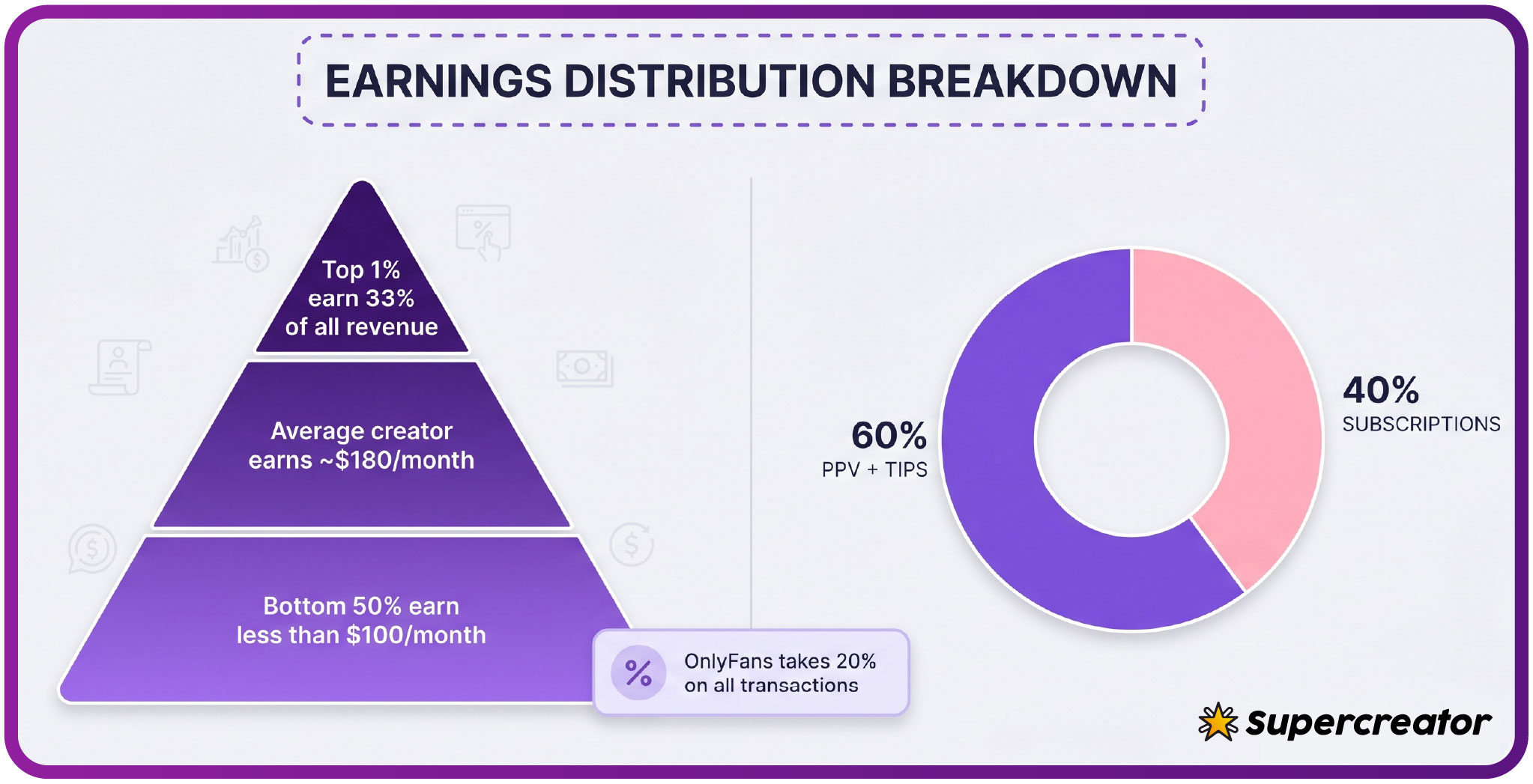
A paid subscription runs between $4.99 and $49.99 per month, with most pages clustering in the $4.99 to $15 range and averages landing between $5 and $10. The platform takes a 20% fee on everything, so the creator keeps 80% of each charge. That economics matters to subscribers because it explains why lower-priced pages often need higher posting volume to be worth a creator’s time.
Value per post is the practical calculation. The second page may still be worth it for the content itself, but the buyer should know which trade they are making.
- Note the exact subscription price before joining.
- Count every post published during your first full billing cycle.
- Divide the price by the number of days that actually had new content.
- Compare that figure against the amount you are comfortable spending per piece of content.
| Posting Rhythm | Typical Price Range | Monthly Value Assessment |
|---|---|---|
| Daily posts | $4.99-$10 | Strong value; cost per post stays low even at higher volumes |
| Several posts per week | $4.99-$10 | Solid value if library depth is also reasonable |
| Weekly posts | $10-$20 | Acceptable when media quality is high and posts are substantial |
| Irregular or sporadic | $20-$49.99 | Weak value unless the library alone justifies the price |
Promotional first months complicate the math. A $3 first month is permitted because promotional pricing may sit below the $4.99 base minimum, but the base price that follows is what you will actually pay long term. If the rhythm does not hold after the promotion ends, the effective value drops sharply in month two.

When Sparse Posting Triggers Auto-Renewal Interruption
Auto-renewal is the default state of a paid subscription, and it continues silently until a subscriber turns it off. A page that charged $10 and delivered two posts that month rarely survives the next billing decision. Turning off auto-renew does not end access immediately; the subscription stays active until the current paid period expires.
- Three-day gaps with no explanation and no scheduled-return notice.
- A visible decline in media quality or post length compared with earlier months.
- Direct messages that go unanswered for a week or more.
- An unexplained price change applied at renewal without an announcement.

When a creator raises the price, auto-renew stops automatically; existing access lasts until the paid period ends. That protects subscribers from surprise increases, but it also means a quiet price change can end your subscription without you deciding anything at all. Sparse posting also costs the platform, since every lapsed renewal removes the 20% fee that would have been collected.
Free Pages and the PPV Messaging Cadence
Instead of a steady content calendar behind a paywall, the free page relies on message timing to convert followers into spenders. PPV unlocks can reach $50 per message, and paid chat commonly runs $3 to $5 per message, while tips can go considerably higher.
- A welcome message typically arrives within the first hour of following.
- The first paywall offer usually appears within 24 to 48 hours.
- Follow-up offers repeat at roughly weekly intervals for active followers.
- Seasonal or holiday promotions interrupt the standard cycle occasionally.
For subscribers, the practical difference is control. You can evaluate each PPV offer on its own merits and skip the ones that do not interest you.
The trade-off is pressure. Frequent message bursts can feel like a constant upsell, and the absence of a subscription means there is no baseline content delivery to compare against. Buyers who prefer predictable output generally do better with a modestly priced paid page than with a free page that monetizes aggressively.

Building a Monthly Review Around Creator Activity
Pick a fixed date, ideally a day or two before your earliest renewal, and audit every active subscription against what it delivered during the period. Count posts, note the longest gap, and check whether the creator posted at least as often as the previous month. A single slow month is not decisive; two consecutive slow months on the same page usually is. Keep the comparison written down, because memory tends to round a quiet month up and a busy month down.
Ranking sites help here because they keep the historical record you would otherwise have to track manually. Publications that follow a stated methodology, such as BestOnlyFans, publish activity data in a consistent format, which makes month-over-month comparison far easier than checking each creator page individually.
Warning: do not let a quiet month push you into compensating with large tips or extra PPV purchases. That pattern raises your effective cost per post precisely when the page is delivering the least.
Among the questions this review answers is a simple one: if you were choosing today, with everything you now know about the posting history, would you subscribe again? For broader context on how the largest accounts sustain their output, you can see who is number 1 on onlyfans and compare their activity patterns against the pages you follow.
Budgeting for Variable Output Across Multiple Pages
Subscribers who run several subscriptions at once face a compounding problem: posting schedules rarely align, so monthly value fluctuates across the whole portfolio rather than page by page. Set the cap before subscribing, not after. Decide that no single creator receives more than a stated monthly amount including subscription, tips, and PPV. When a page goes quiet, the cap naturally holds spending down; when a page is highly active, the cap prevents the opposite mistake.
- Fixed monthly cap per creator: one number covering subscription, tips, and PPV combined.
- Shared renewal calendar: all renewal dates in one place so lapses never happen by accident.
- Fallback free-page list: two or three $0 pages to follow when a paid page goes quiet.
- PPV spending freeze: a voluntary pause on paid messages during your review week.
Watch the overlap problem too. When three pages all slow down in the same month, the portfolio cost per post spikes even though each individual charge looks small. A calendar that shows all renewal dates side by side makes those clusters visible before they happen.

The goal is not to maximize content per dollar every single month; it is to avoid paying premium prices for pages that have stopped producing.
FAQ
How can I tell if a creator’s posting history is genuine rather than bulk-uploaded?
Bulk uploads inflate total media counts quickly, but a steady weekly average can only build up over months of regular activity. A long history with a consistent weekly figure is far harder to manufacture than a large one-off library.
Does a creator’s posting frequency affect whether their page appears on ranking sites?
Pages with recent post dates and consistent weekly averages tend to be easier to rank and compare, while dormant pages usually fall out of active listings.
What happens to my auto-renewal if a creator stops posting entirely mid-cycle?
Your access continues until the paid period ends, and the next charge proceeds as normal unless you turn auto-renew off yourself. The platform does not suspend billing because a creator went quiet, so the decision to stop paying is entirely yours to make before the renewal date.
Should I prioritize posting consistency or content type when choosing between two pages at the same price?
At identical prices, the page with the steadier weekly average will almost always deliver better value per dollar. If both pages post at similar rates, then compare library depth, media quality, and how directly the creator answers messages.